


The NYC Countertop Dilemma: Marble, Quartzite, or Porcelain Slab - Which One Actually Works in Your Apartment?
Last Updated:
August 16, 2026
Your co-op board approved the plans. The contractor is booked. Now you're standing in a Long Island City slab yard with a stone salesperson telling you that Taj Mahal quartzite "basically never needs sealing" and that the porcelain option is "just as beautiful."
One of those statements is more true than the other. Knowing the difference matters before you spend $4,000 to $8,000 on 40 square feet of kitchen counter.
This comparison covers all three materials honestly: what they look like, what they actually demand of you, how they hold up in a luxury NYC kitchen design, and what they cost once you account for the building access fees, union labor rates, and elevator scheduling that make Manhattan installations uniquely expensive.
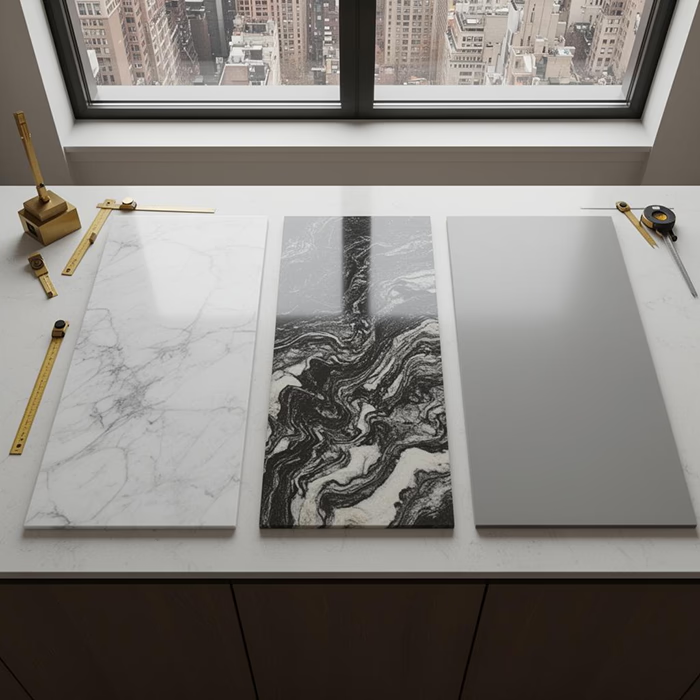


These three materials are not interchangeable upgrades of the same thing. They come from different processes, behave differently under daily use, and appeal to different kinds of homeowners.
Marble is a metamorphic limestone. It is soft, porous, acid-sensitive, and irreplaceable in terms of depth and luminosity. No engineered surface fully replicates the way light moves through a honed Calacatta slab.
Quartzite is a metamorphic sandstone formed under extreme heat and pressure into one of the hardest natural stones available (rating 7 on the Mohs scale compared to granite's 6 to 6.5). It often carries the white-and-grey veining of marble with substantially better durability.
Porcelain slab (including sintered stone brands like Dekton and Neolith) is an engineered product kiln-fired at extreme temperatures. It is non-porous, chemically inert, and designed to mimic natural stone while requiring essentially zero maintenance.
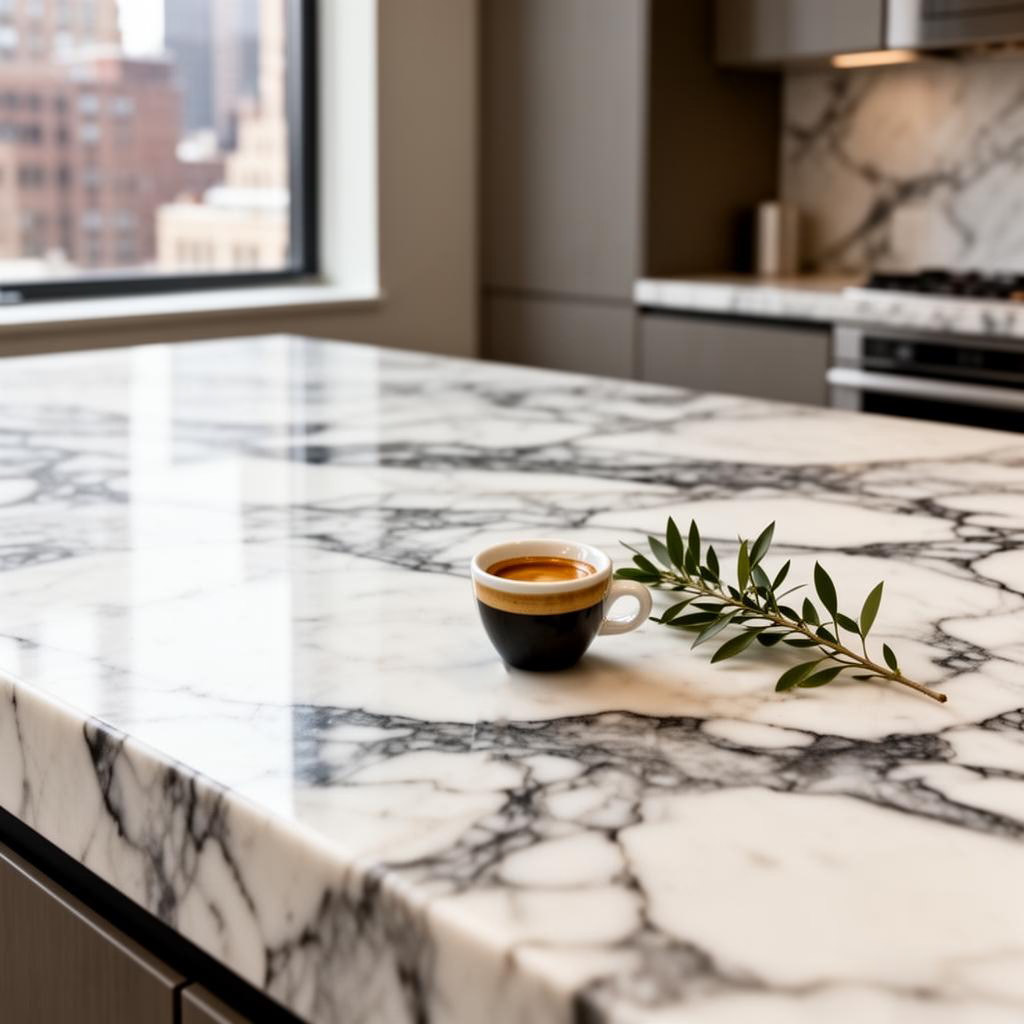
Marble's visual quality is unique among countertop materials. Calacatta, Statuario, and Carrara each carry distinct veining patterns that read as living objects (warm, luminous, and impossible to replicate exactly). No two slabs are the same. The depth that polished or honed marble achieves when light hits it is the standard against which everything else is measured.
The aesthetic trade-off is real, though. In a working kitchen, marble develops a patina. Subtle etching, dulling of the finish where acids have made contact, and occasional staining will occur. Some designers call this character. It is also permanent unless you hire a restoration specialist to re-hone or re-polish the marble surface. In Manhattan, that service runs roughly $200 to $500 for a typical kitchen counter, and it is not a one-time expense.
The best quartzite slabs (Taj Mahal, Super White, White Macaubas) are visually stunning and genuinely mistaken for marble. The veining tends to be softer and more linear than marble's dramatic movement, which appeals to buyers who want a quieter, more architectural look. Because quartzite is a natural stone, every slab is unique.
One critical caveat: the quartzite market has a well-documented problem with misrepresentation. Softer stones, particularly Fantasy Brown and some varieties sold as "soft quartzite", are actually dolomitic marble or transitional stones that etch like marble when exposed to acid. Always request a scratch test (with a steel key or knife) and ask your stone yard for the specific quarry of origin. A true quartzite won't scratch easily; dolomitic marble will. Reputable NYC stone yards, such as UMI The Source in Brooklyn, will accurately identify the stone.
High-end porcelain slab has closed most of the visual gap with natural stone. Brands like Dekton (Cosentino) and Neolith produce large-format slabs that convincingly replicate Calacatta marble, concrete, and even book-matched stone at a resolution that is impressive at kitchen-counter viewing distance. The limitation is physics: the printed surface pattern on porcelain lacks depth. It reads beautifully from two feet away and less convincingly from six inches. The warmth, translucency, and tactile character of natural stone (particularly marble) remain unmatched by any engineered product.
Porcelain wins on design consistency. If you need two slabs to cover a large kitchen, they will match precisely in a way that natural stone cannot guarantee.
This is where the three materials diverge most sharply, and where NYC conditions make the stakes higher than they would be in a less-intensive kitchen.
Marble is porous and reacts to acids. Lemon juice, vinegar, red wine, tomato sauce, and many common cleaners all etch the surface. This chemical reaction removes the polish at a microscopic level, leaving a dull ring or mark. Sealing slows staining but does not prevent etching; etching is a surface reaction, not absorption. A high-quality penetrating sealer should be reapplied every 3 to 6 months in a working kitchen.
In NYC's compact apartments, where the kitchen is often the social center of the home and counter space is limited, marble's vulnerabilities are more exposed than in a large suburban kitchen with dedicated prep zones. High-end Manhattan renovators increasingly use marble strategically, on a dedicated island or pastry station, rather than as the primary work surface.
True quartzite requires annual sealing with a quality impregnating sealer. It does not etch when exposed to acid, as marble does. Heat resistance is comparable to granite. In daily use, a properly sealed quartzite countertop is a practical, low-drama surface that looks like natural stone because it is natural stone.
The maintenance complication is the "soft quartzite" problem described above. If you've purchased dolomitic marble labeled as quartzite, you have marble maintenance requirements without knowing it. Do the scratch test and get the stone identified before installation. Once it's in, the label on the receipt won't change how it behaves.
Porcelain is non-porous and requires no sealing. It is chemically inert, meaning acids do not etch it. Water absorption is approximately 0.05%, making it essentially impervious to staining under normal use. Cleanup is a damp cloth. For NYC owners who travel frequently, rent their apartment, or simply want a surface that performs without a maintenance schedule, porcelain slab is the rational choice.
The maintenance vulnerability that exists is at the edges. Porcelain's hardness makes it brittle when struck with a blunt object. A heavy pan dropped on a corner can chip or crack an edge. Once installed on a properly prepared substrate, the flat surface is extremely durable; it's the perimeter that requires care.
Quartzite is the leader in scratch resistance. At 7 on the Mohs scale, it is harder than steel and harder than most kitchen tools. It handles heat from cookware as well as granite. True quartzite is the most durable natural stone option for an active kitchen.
Porcelain slab is harder than granite and resistant to scratches from knives and cookware. The heat resistance of porcelain is also exceptional. Dekton, for example, is rated to withstand temperatures well above 500°F without damage. The brittleness issue is real but limited to impact at edges and corners.
Marble scratches and etches under normal kitchen use. It is structurally sound; it won't crack under thermal shock the way porcelain can, but its surface finish is genuinely vulnerable. A honed finish (matte rather than polished) conceals etching better than a polished surface and is the standard recommendation for marble in working kitchens.
In NYC apartments, weight is not an abstract concern. Whether marble, quartzite, or granite, full 3cm stone slabs are heavy. Older pre-war buildings sometimes have substrate requirements that must be confirmed before installation. Porcelain slabs, available in 6mm and 12mm thicknesses, are substantially lighter and can often be installed directly over existing countertop substrate, reducing both structural load and demolition cost.
All three materials, properly installed and maintained, will outlast the kitchen renovation itself. Marble and quartzite, as natural stones, carry strong resale appeal in NYC's luxury market. Porcelain slab, particularly Dekton and Neolith, has moved from a niche choice to a recognized premium material that sophisticated buyers understand. The resale gap between natural stone and high-end porcelain has narrowed significantly.
NYC countertop installation carries costs and complications that don't exist elsewhere. Fabrication and installation labor in New York runs $35 to $65 per hour, which is among the highest in the country. A two-person installation crew for a standard kitchen costs $600 to $1,200 in Manhattan and Brooklyn, compared to $350 to $700 in most other markets.
Building access adds another layer of complexity. Service elevator windows, often limited to two-hour slots, govern when slabs can move through the building. Full 3cm natural stone slabs are heavy and awkward in tight service elevators; some buildings require structural sign-off or restrict slab dimensions. Porcelain's thinner profile and lighter weight can meaningfully reduce the logistical complexity of getting material from the street to your unit. Building COI fees and elevator reservation costs typically run $300 to $2,000 on top of the countertop itself.
NYC kitchens are often under 30 square feet, which is small enough to cut from a single remnant slab. Remnants at slab distributors in Long Island City, the Brooklyn Navy Yard area, and Northern New Jersey sell at 30 to 60% below full-slab pricing. This is one of the most effective ways to access premium quartzite or marble at a manageable cost in a compact Manhattan kitchen.
These figures include material, fabrication, standard edge, and one sink cutout. They do not include building access fees ($300–$2,000), plumbing disconnect/reconnect ($200–$400), or old countertop removal ($300–$700). Outer boroughs run approximately 10-25% below Manhattan pricing.
Premium quartzite varieties, such as Taj Mahal or bookmatched selections, incur the highest material costs. Entry-level porcelain slabs are generally the most accessible price point for the performance they deliver.
A growing number of high-end Manhattan renovations are combining materials rather than choosing one. Quartzite on the primary countertop (for its natural warmth, durability, and tactile quality), paired with a porcelain slab on the backsplash or island sides, where the thin profile and seamless patterning create a cleaner architectural statement. This approach gets the soul of natural stone, where you touch and work on it, and the practicality of porcelain, where maintenance and visual consistency matter most.
For kitchens where marble is the design imperative, specifying it only on the island protects the most-used work surface while preserving the aesthetic anchoring marble provides.
Choose marble if you:
Choose quartzite if you:
Choose a porcelain slab if you:
Yes, and it happens faster than most buyers expect. Acids from everyday cooking (lemon juice, tomato, wine, vinegar-based cleaners) chemically react with marble's calcium carbonate surface, leaving dull marks that sealing does not prevent. In a kitchen where the counter is subject to heavy daily use, etching is a near certainty within the first year. A honed finish conceals it better than a polished one, but the reaction still occurs.
True quartzite rates 7 on the Mohs hardness scale, compared to marble's 3 to 4. However, the quartzite market has a misrepresentation problem. Stones labeled "soft quartzite" are often dolomitic marble or transitional stones that behave like marble when exposed to acid. Always request a scratch test with a steel key before purchasing, and ask for the stone's quarry of origin.
Significantly more. NYC fabrication and installation labor runs $35 to $65 per hour, among the highest in the country. A two-person install crew costs $600 to $1,200 for a standard Manhattan kitchen. On top of that, building access, COI requirements, service elevator reservation fees, and building protection requirements can quickly add $300 to $2,000 to any project.
A porcelain slab is extremely hard but brittle when struck with a blunt object. Dropping a heavy object on an edge or corner can chip or crack it. The flat work surface performs exceptionally well once installed; the risk period is primarily during fabrication and transport. Working with a fabricator that uses CNC machinery and porcelain-specific programming helps substantially reduce the risk of breakage.
All three are recognized premium materials in the NYC market. Natural stone (marble and quartzite) carries traditional luxury appeal with buyers and appraisers. High-end porcelain slabs (Dekton, Neolith) are now recognized as a premium choice by sophisticated buyers. The resale gap has narrowed significantly. What matters more than material is the quality of fabrication, edge treatment, and overall kitchen execution.
No. Porcelain is non-porous with a water absorption rate of approximately 0.05%, meaning it does not absorb stains and requires no sealing. This is one of its principal advantages over natural stone in a working kitchen.
A porcelain slab, specifically a sintered stone such as Dekton or Neolith, is the strongest choice for an NYC rental. It requires no maintenance schedule, resists stains and heat from tenants who don't treat it carefully, and its durability over time reduces the risk of replacement. High-end porcelain also reads as premium to prospective renters.








.svg)