The NYC Renovation Team Map: Designer vs Architect vs GC vs Expeditor (and When You Need Each)
Last Updated:
September 20, 2026
Key Takeaways
Distinct Roles, Unified Vision: Understand the unique contributions of interior designers, architects, general contractors, and expediters, and how their coordinated efforts bring renovation in NYC to life.
Navigating NYC's Complexities: Learn when specific professionals are legally or practically required for permits, structural changes, and co-op/condo board approvals in the demanding New York City environment.
Achieve Elegant Livability: Discover how assembling the right team from the outset ensures a refined, functional, and stress-free renovation, culminating in a home that perfectly balances Parisian elegance with modern comfort.
Embarking on a home renovation in New York City is an exciting endeavor, yet it often presents a labyrinth of decisions, regulations, and specialized roles. For discerning homeowners envisioning a space that epitomizes Parisian elegance while embracing modern livability, understanding the key players in your renovation journey is paramount.
From transforming aesthetics to executing structural changes and navigating intricate permitting, each professional (the interior designer, architect, general contractor, and expediter) plays a distinct yet interconnected role. This comprehensive guide will demystify "The NYC Renovation Team Map," illuminating when and why you need each expert to ensure your full-service renovation project is not only flawlessly executed but also a truly refined and welcoming experience.
New York City, with its iconic architecture and dynamic urban pulse, demands a particular finesse when it comes to home renovation. It’s a city where every square foot is precious, every detail scrutinized, and every regulatory step critical. For those seeking to infuse their residences with a blend of classic sophistication and contemporary comfort, the journey begins not with a hammer, but with assembling the right ensemble of experts. Think of your renovation as a grand architectural ballet; each dancer has a crucial part, and their harmonious performance ensures a breathtaking final act.
The Visionary: The Interior Designer - Curating Your Elegant Sanctuary
At LSB Interior, we believe your home should be a personal narrative, a thoughtfully curated space that evokes both beauty and comfort. This is precisely the domain of the Interior Designer. Far beyond selecting paint colors, an interior designer orchestrates the aesthetic and functional heartbeat of your home, ensuring it reflects your unique taste while optimizing for modern living.
What Interior Designers Are Responsible For
Aesthetic Conceptualization: Developing a cohesive design concept that marries Parisian elegance with modern functionality, encompassing style, color palettes, textures, and lighting.
Space Planning & Flow: Optimizing the layout within existing structural confines to enhance daily living, improve flow, and maximize every precious inch of NYC real estate. This includes furniture placement, traffic patterns, and the strategic definition of zones.
Material & Finish Specification: Selecting exquisite and durable materials, finishes, fixtures, and appliances that align with the design vision and withstand the rigors of city life. This includes bespoke millwork, sophisticated wall coverings, and luxurious flooring.
Furnishings, Art & Accessories: Sourcing and specifying furniture, lighting, window treatments, art, and decorative accents to create a layered, refined, and deeply personal environment.
Project Management (Design Aspect): Overseeing the implementation of the design, collaborating with contractors and other trades, and ensuring the aesthetic vision is realized with precision and an uncompromising eye for detail.
When Do You Need An Interior Designer
When your space feels uninspired or lacks cohesion: If you crave a dramatic aesthetic transformation that reflects a sophisticated and personalized style.
For optimized functionality and flow: When your current layout doesn't serve your lifestyle, and you need creative solutions for storage, entertaining, or daily routines, without major structural changes.
For a truly curated experience: If you desire a home where every element, from bespoke cabinetry to art selection, is thoughtfully chosen and perfectly integrated.
To save time and avoid costly mistakes: An experienced designer navigates the vast market of materials and furnishings, ensuring quality selections that fit your budget and timeline.
For expert collaboration: Your designer acts as your advocate, ensuring the contractor executes the design with precision and quality.
For luxury homeowners in NYC, an interior designer like Laura Behar is not merely a luxury but a necessity for transforming a residence into a truly bespoke sanctuary. LSB Interior ensures your space tells a story of refined living, where comfort meets unparalleled style.
The Structural Sage: The Architect – Sculpting Space with Integrity
While an interior designer crafts the soul of a space, the Architect redefines its very bones. In New York City, where structural integrity, building codes, and historical preservation are paramount, an architect is often the linchpin for significant renovations. They possess the technical expertise to ensure your vision is not only beautiful but also structurally sound, legally compliant, and safely executed.
What Architects Are Responsible For
Structural Modification & Spatial Redesign: Designing changes to load-bearing walls, reconfiguring major layouts that impact plumbing stacks or electrical mains, or adding new square footage (e.g., combining units).
Building Code & Zoning Compliance: Navigating the labyrinthine regulations of the NYC Department of Buildings (DOB), ensuring all plans meet stringent safety, egress, and construction standards.
Permit Drawings & Approvals: Preparing detailed architectural drawings, specifications, and documentation required for DOB and often co-op/condo board approvals. This includes structural, mechanical, electrical, and plumbing plans.
Site Analysis & Feasibility Studies: Assessing the existing structure, identifying potential challenges, and determining the feasibility of proposed changes before construction begins.
Construction Administration: Overseeing the construction process from a technical standpoint, ensuring the contractor adheres to the architectural plans and specifications, and certifying completed work.
When Do You Need An Architect
Any structural changes: Moving or removing load-bearing walls, creating new openings, or altering the building’s exterior.
Major layout reconfigurations: If you are significantly changing the footprint of rooms, relocating kitchens or bathrooms (especially if plumbing lines are affected), or combining apartments.
Changes impacting building systems: Alterations to the main electrical panel, HVAC systems, or significant plumbing re-routing beyond simple fixture replacements.
DOB permit requirements: Many projects in NYC, particularly those involving structural or significant mechanical changes, legally require an architect's stamp and submission to the DOB.
Co-op/Condo Board Mandates: Most co-op renovations and condo boards in NYC will require stamped architectural plans for any substantial renovation.
An architect is your essential guide through the complex structural and regulatory landscape of NYC, ensuring the foundation of your elegant new space is built on expertise and compliance.
The Orchestrator: The General Contractor (GC) - Bringing the Vision to Life
Once the design is perfected and the plans are approved, it's the General Contractor (GC) who steps onto the stage to transform blueprints into a tangible reality. The GC is the project manager of the construction phase, the on-site maestro who coordinates all trades, manages the budget, and ensures the work adheres to both the design intent and the highest standards of craftsmanship.
What General Contractors Are Responsible For
Construction Execution: Directly performing or overseeing all aspects of the physical renovation, from demolition to finishing touches.
Subcontractor Management: Hiring, scheduling, and supervising skilled tradespeople (plumbers, electricians, carpenters, painters, etc.), ensuring their work is timely, efficient, and up to code.
Budget & Schedule Management: Providing a detailed cost estimate, managing expenditures, and creating a realistic timeline for project completion, while mitigating delays.
Material Procurement: Ordering and managing the delivery of construction materials, ensuring they are on-site when needed.
Quality Control & Site Safety: Regularly inspecting work to ensure it meets quality standards, adhering to building codes, and maintaining a safe work environment.
Communication Hub: Serving as the primary point of contact for the homeowner, architect, and designer during the construction phase, providing regular updates and resolving issues.
When Do You Need A General Contractor
For any physical construction: If your project involves demolition, framing, new plumbing or electrical installations, significant tiling, custom millwork installation, or structural alterations.
To manage multiple trades: A GC simplifies the process by coordinating all the various professionals required for a complex renovation.
For budget and timeline adherence: A reputable GC will provide transparent pricing and work diligently to keep the project on track and within budget.
To ensure quality and compliance: They are responsible for ensuring all work meets NYC building codes and the quality standards outlined by the architect and designer.
To navigate NYC logistical challenges: GCs are adept at managing the unique challenges of renovating in the city, such as limited access, parking restrictions, and building-specific rules.
Choosing a trusted and experienced GC in NYC is paramount. Their expertise in navigating urban logistics and managing a diverse team of trades will be crucial for the smooth realization of your refined interior.
The Navigator: The Expeditor - Unlocking NYC’s Bureaucratic Doors
The intricate dance of permits and approvals in New York City can be daunting. This is where the Expeditor becomes an invaluable ally. While often working behind the scenes, an expediter is a specialist in navigating the bureaucratic maze of the NYC Department of Buildings (DOB), ensuring your project secures the necessary approvals efficiently and without undue delay.
What Expeditors Are Responsible For
Permit Application & Filing: Preparing and submitting all required plans, forms, and documentation to the DOB for various permits (e.g., demolition, construction, plumbing, electrical).
DOB Liaison: Acting as a direct point of contact with DOB officials, tracking the status of applications, responding to comments, and facilitating inspections.
Code Interpretation: Possessing an in-depth understanding of NYC building codes, zoning regulations, and administrative requirements, helping to anticipate and resolve potential issues.
Co-op/Condo Board Coordination: Assisting with the often complex paperwork and submission requirements mandated by individual building boards.
Violation Resolution: Helping to resolve existing building violations that might impede new permit applications.
When Do You Need An Expeditor
For any project requiring DOB permits: While an architect or GC may handle some basic permitting, an expediter is specialized in streamlining this often-frustrating process.
Complex or large-scale renovations: Projects involving significant changes, multiple permits, or those in special zoning districts (like historic preservation areas) benefit greatly from an expediter’s expertise.
Time-sensitive projects: If your renovation has a strict deadline, an expediter can significantly reduce the time spent waiting for approvals.
To minimize delays and costly errors: Their proactive approach and knowledge of the system can prevent common pitfalls that lead to project slowdowns.
To navigate the nuances of NYC bureaucracy: For homeowners unfamiliar with the specific jargon and processes of the DOB, an expediter is indispensable.
An expediter is the unseen force that keeps your project moving forward, clearing the administrative hurdles so your design and construction teams can focus on crafting your elegant home.
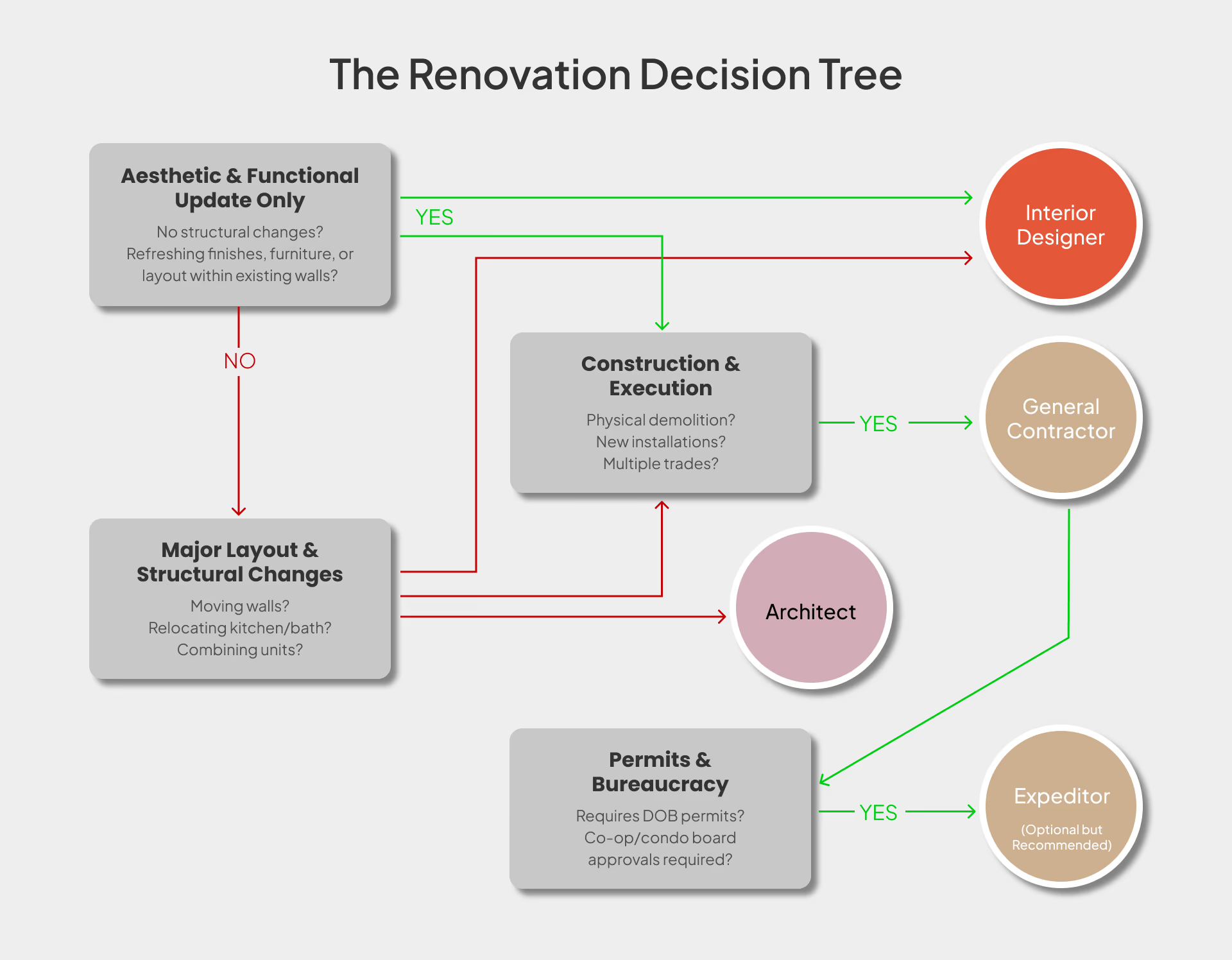
The Apartment Renovation Decision Tree
The Symphony of Collaboration: When Roles Overlap and Intersect
While each professional has a distinct role, the true magic of a successful NYC renovation lies in their seamless collaboration. Imagine a meticulously choreographed orchestra where the designer crafts the melody, the architect provides the structure, the GC conducts the performance, and the expediter ensures the venue is ready.
Designer & Architect: Often work hand-in-hand from the outset. The designer provides the aesthetic vision and functional needs, which the architect translates into structural plans and code-compliant drawings. For example, the designer might envision an open-concept living space, and the architect determines how to safely remove a load-bearing wall to achieve it.
Designer & General Contractor: The designer acts as the homeowner’s advocate during construction, ensuring the GC’s execution aligns perfectly with the design specifications, material selections, and quality standards. Regular site visits and communication are key.
Architect & General Contractor: The architect provides the GC with detailed plans, and the GC then executes those plans, offering practical input on constructability and sourcing. The architect also reviews the GC's work for compliance with the approved plans.
All Together: In an ideal scenario, all parties are engaged early in the process. This integrated approach allows for proactive problem-solving, efficient communication, and ensures that aesthetic aspirations, structural realities, and regulatory requirements are harmonized from conception to completion.
For discerning homeowners, choosing a team that values open communication and mutual respect is paramount. LSB Interior fosters these relationships, ensuring a holistic approach where every detail is considered and every challenge met with collaborative ingenuity.
Navigating NYC Specifics: Beyond the Blueprint
Renovating in New York City introduces layers of complexity unique to its urban fabric. Beyond the standard building codes, homeowners must contend with:
Co-op and Condo Board Approvals: Nearly all apartment renovations in NYC require board approval. This often involves submitting detailed alteration agreements, architectural plans, proof of insurance, and adhering to strict building rules regarding work hours, noise, and common area protection. Your architect and GC will be vital in preparing these submissions and adhering to these rules.
Landmark Preservation Commission (LPC): If your property is in a historic district or is a landmarked building, any exterior changes, and sometimes even significant interior alterations, will require approval from the LPC. An architect experienced with LPC filings is indispensable here.
Space & Logistics: Renovating in a densely populated city means navigating limited space for material deliveries, debris removal, and worker access. A skilled GC will have strategies in place to manage these logistical challenges efficiently.
Embracing these specific NYC nuances with a prepared and experienced team transforms potential hurdles into manageable steps towards your dream home.
Conclusion
The journey of transforming an NYC residence into a sanctuary of Parisian elegance and modern livability is a deeply rewarding one, especially when guided by the right expertise. Understanding the distinct roles and invaluable contributions of your interior designer, architect, general contractor, and expediter is the first step towards a seamless and successful renovation.
Each professional brings a critical skill set to the table, and their orchestrated collaboration ensures your vision is not only realized but elevated, meticulously curated, and flawlessly executed. At LSB Interior, we pride ourselves on creating spaces that feel both refined and welcoming, thoughtfully designed down to the last detail. By assembling a dream team dedicated to excellence, you can embark on your renovation journey with confidence, knowing that your extraordinary NYC home awaits, perfectly tailored to your discerning taste and lifestyle.
FAQ
Do I always need an architect for a NYC apartment renovation?
Not always, but often. If your renovation involves structural changes (like moving or removing load-bearing walls), significantly altering the footprint of rooms, relocating plumbing lines for kitchens or bathrooms, or combining units, an architect is legally required and essential for safety and compliance with NYC Department of Buildings (DOB) codes. For purely aesthetic updates or minor non-structural layout adjustments, an experienced interior designer can often lead the project.
What's the difference between an interior designer and an interior decorator?
An interior designer has a more comprehensive scope, often involving formal education, training, and licensing. They are involved in space planning, functional layouts, structural considerations (in collaboration with architects), material specifications, and project management, focusing on both the aesthetics and the functionality of a space. An interior decorator primarily focuses on the aesthetic enhancement of a finished space through furniture, accessories, color palettes, and soft furnishings, without making structural changes. LSB Interior operates as an interior design firm, offering a holistic approach to crafting your space.
How do I find a reputable general contractor in NYC?
Finding a reputable GC in NYC involves several steps: ask for referrals from your interior designer or architect, check online reviews and industry associations (like NARI), verify licenses and insurance, review their portfolio of similar projects, and always get multiple bids with detailed scopes of work. Interview them thoroughly, focusing on their communication style, experience with NYC buildings, and logistical management capabilities in a dense urban environment.
When should I hire an expediter?
You should consider hiring an expediter for any project that requires Department of Buildings (DOB) permits, especially for complex or time-sensitive renovations. While your architect or general contractor might handle some basic permitting, an expediter specializes in navigating the intricate DOB processes, tracking applications, addressing comments, and ensuring approvals are obtained as efficiently as possible, saving you significant time and potential delays.
Can an interior designer handle permit applications?
Generally, an interior designer cannot submit permit applications to the NYC Department of Buildings for projects requiring an architect's or engineer's stamp. Their role is primarily focused on the interior aesthetics and functional layout within existing structural parameters. However, an interior designer will often coordinate with the architect or general contractor to ensure that the design plans are incorporated into the necessary permit drawings and submissions.
What is a design-build firm, and is it right for me?
A design-build firm combines both the design and construction services under one roof, providing a single point of contact for the homeowner. This can streamline communication, potentially reduce timelines, and offer integrated budgeting. It can be a good option for homeowners who prefer a highly integrated process and simplified project management. However, it's essential to ensure the firm's design aesthetic aligns with your vision and that they offer the specialized expertise of both a seasoned designer and a skilled contractor.
How much does a renovation team cost in NYC?
The cost of a renovation team in NYC varies widely based on the scope, scale, and complexity of your project, as well as the experience and reputation of the professionals involved.
Interior Designers: Typically charge a flat fee, hourly rate, or a percentage of the project budget (often 10-20% for full-service).
Architects: Often charge a percentage of the construction cost (e.g., 10-15% for residential projects) or a fixed fee.
General Contractors: Provide a total project cost estimate, including labor, materials, and subcontractor fees.
Expediters: Usually charge a flat fee per permit or project, depending on complexity. It's crucial to obtain detailed proposals from each professional and factor in a contingency budget (15-20%) for unforeseen expenses inherent in NYC renovations.
As a first-time homeowner, I was overwhelmed with all the decisions to make, until I started working with Laura. She brought clarity, style, and warmth to every room. I actually enjoyed the process, and now my home truly reflects me.
— Johnny
Timeless Design, Modern Functionality
Laura has an impeccable eye for detail. She curated pieces that elevated our space without making it feel too 'designed.' Her ability to mix textures, tones, and layout was exactly what we needed for our Upper East Side apartment. Discreet, professional, and endlessly talented
— Salley
From Outdated to Outstanding
She has a unique ability to merge function with beauty, and she makes the entire design process feel personal and fun. We couldn’t imagine working with anyone else.
— Stephanie
Breathtaking Transformation Inside and Out
She brought a clear vision, a calm presence, and an incredible sense of style. Our home now feels completely transformed. She has an incredible eye for detail!
— Cathy
Design That Feels Like Home
Laura translated every Pinterest pin and half-formed idea into a home that feels both elevated and completely ‘us’. She handled vendors, deliveries, and last-minute surprises with zero drama—the brownstone was ready for move-in exactly when she promised..
— Emily R.
Subscribe to our newsletter
Thank you! Your submission has been received!
Oops! Something went wrong while submitting the form.













.svg)